When discussing prosthetics, attention is often focused on functional aspects: comfort, biomechanics, durability, and performance. However, for those who wear a prosthesis every day, there is also a deeply personal dimension connected to self-image, the expression of identity, and the desire to feel represented by what they wear.
It was precisely from this awareness that one of the most fascinating projects developed by CreaMED was born: the creation of a custom aesthetic cover for a transtibial prosthesis, designed and manufactured through a fully digital process combining high-precision 3D scanning, industrial design, and professional 3D printing.
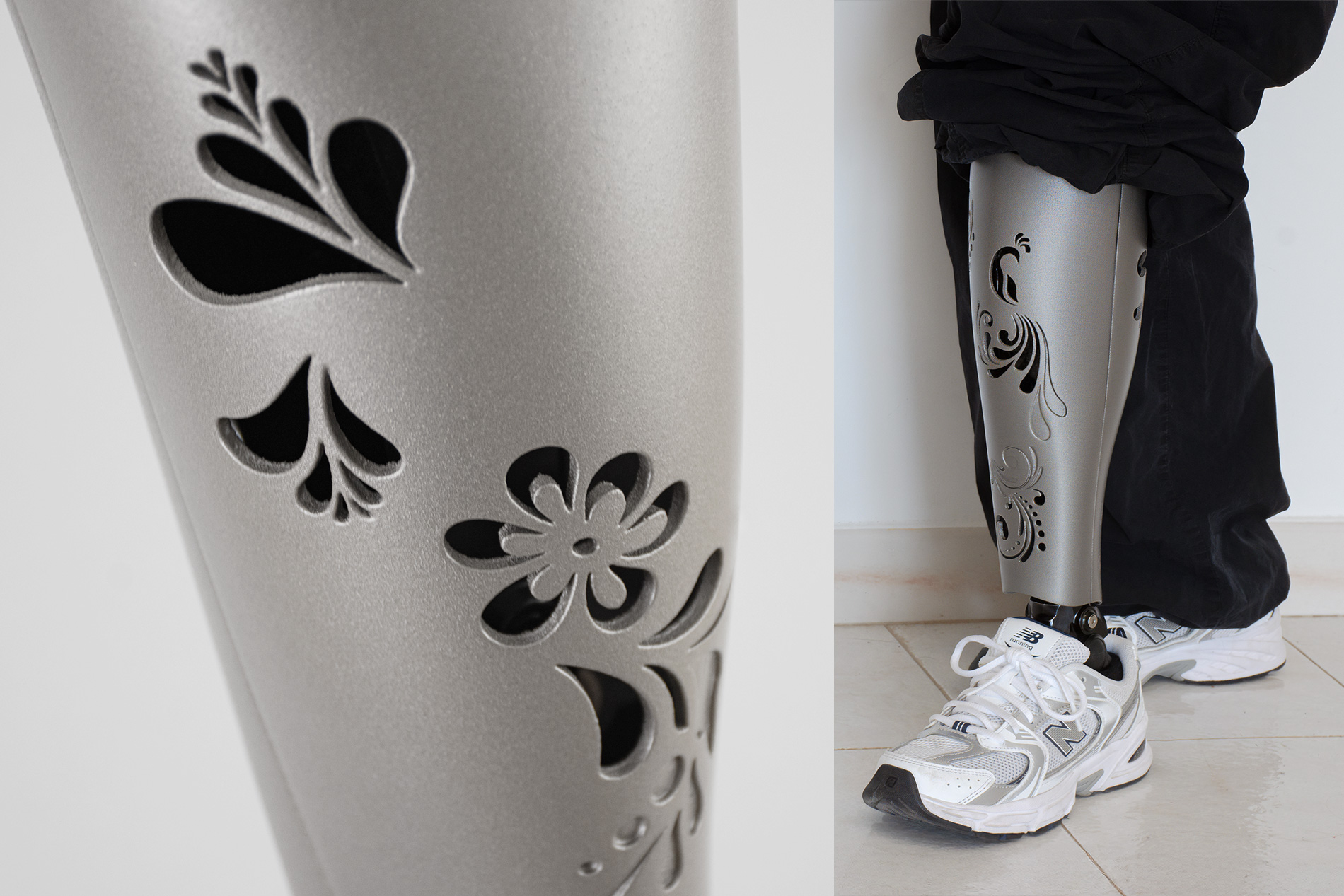
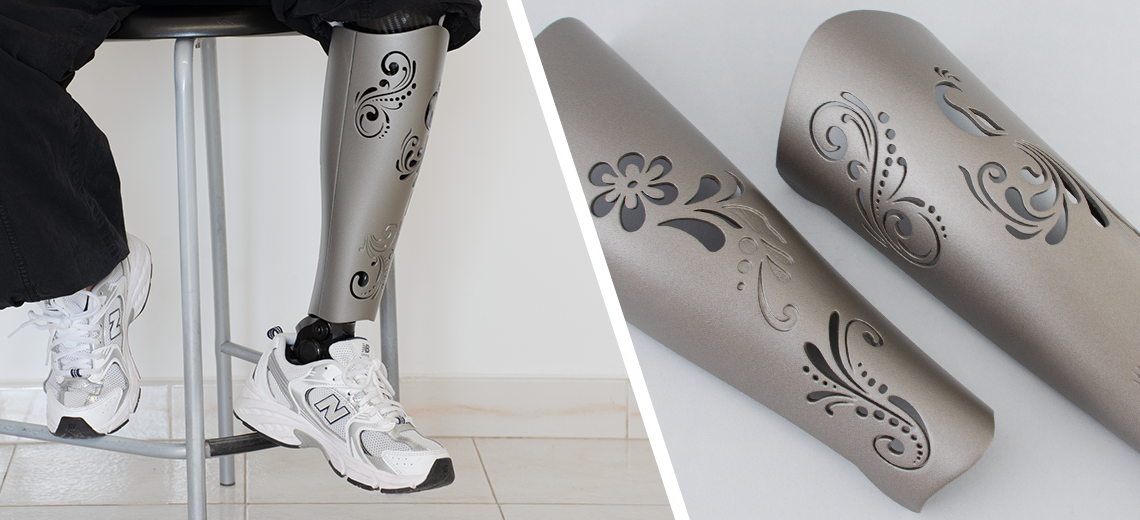
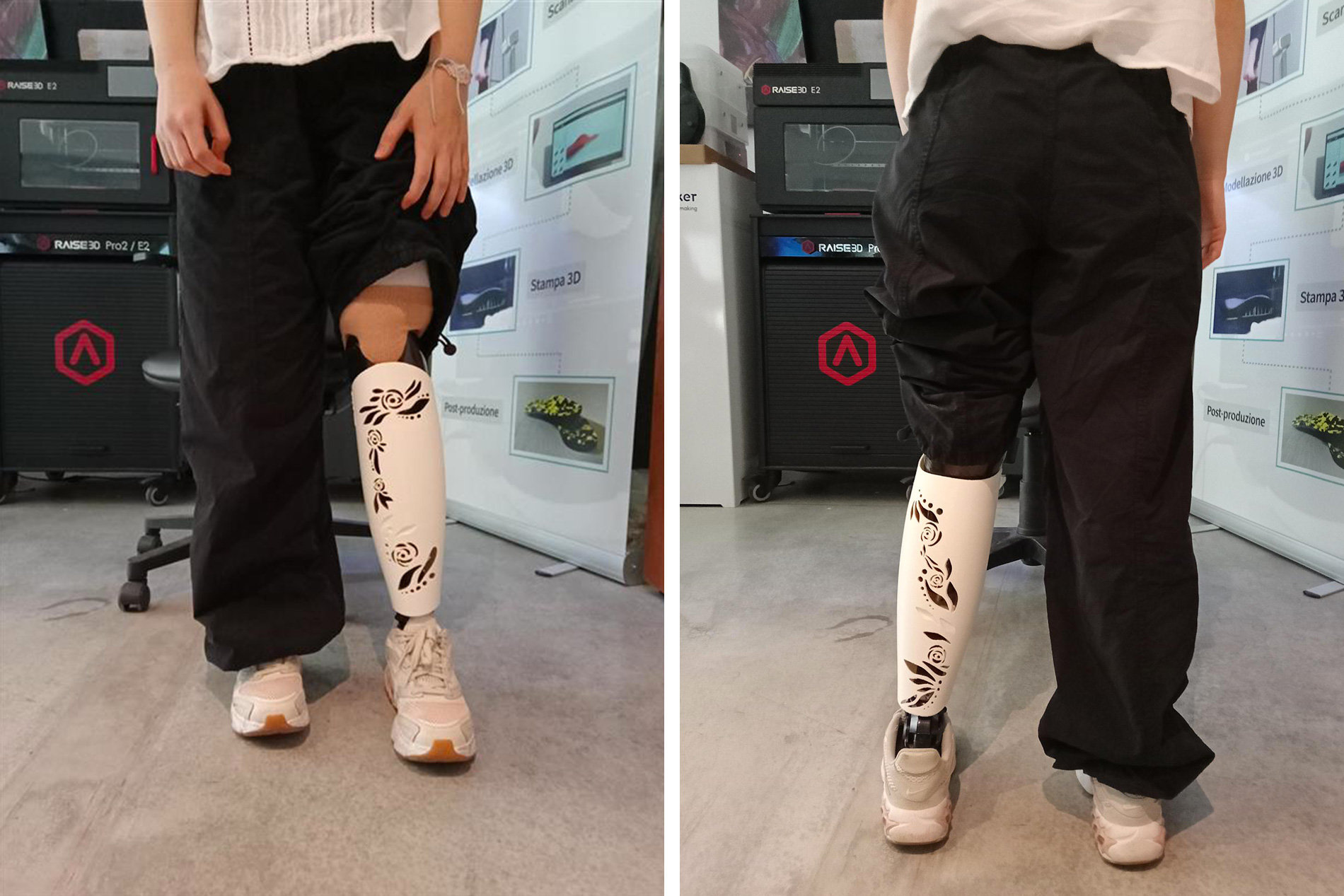
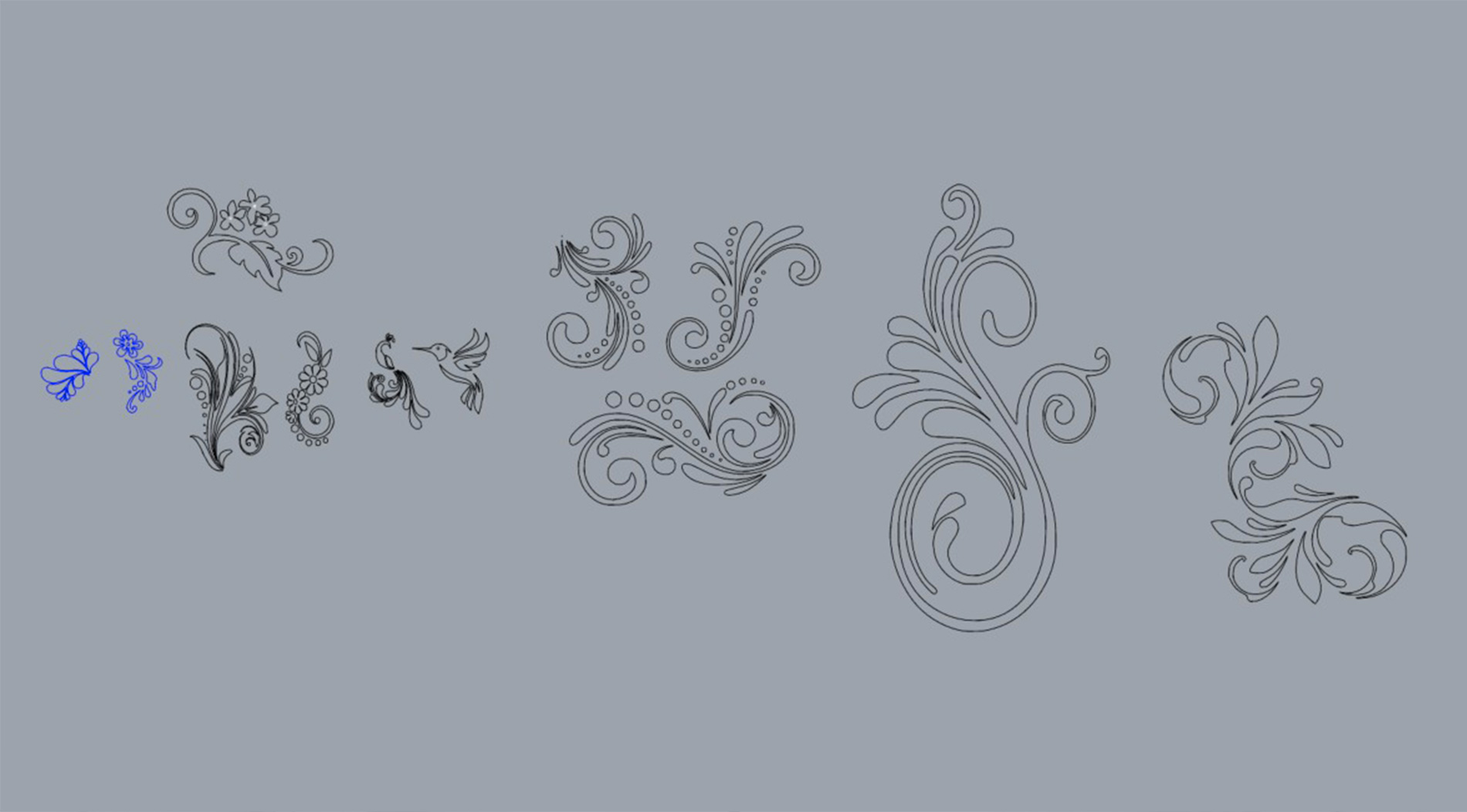
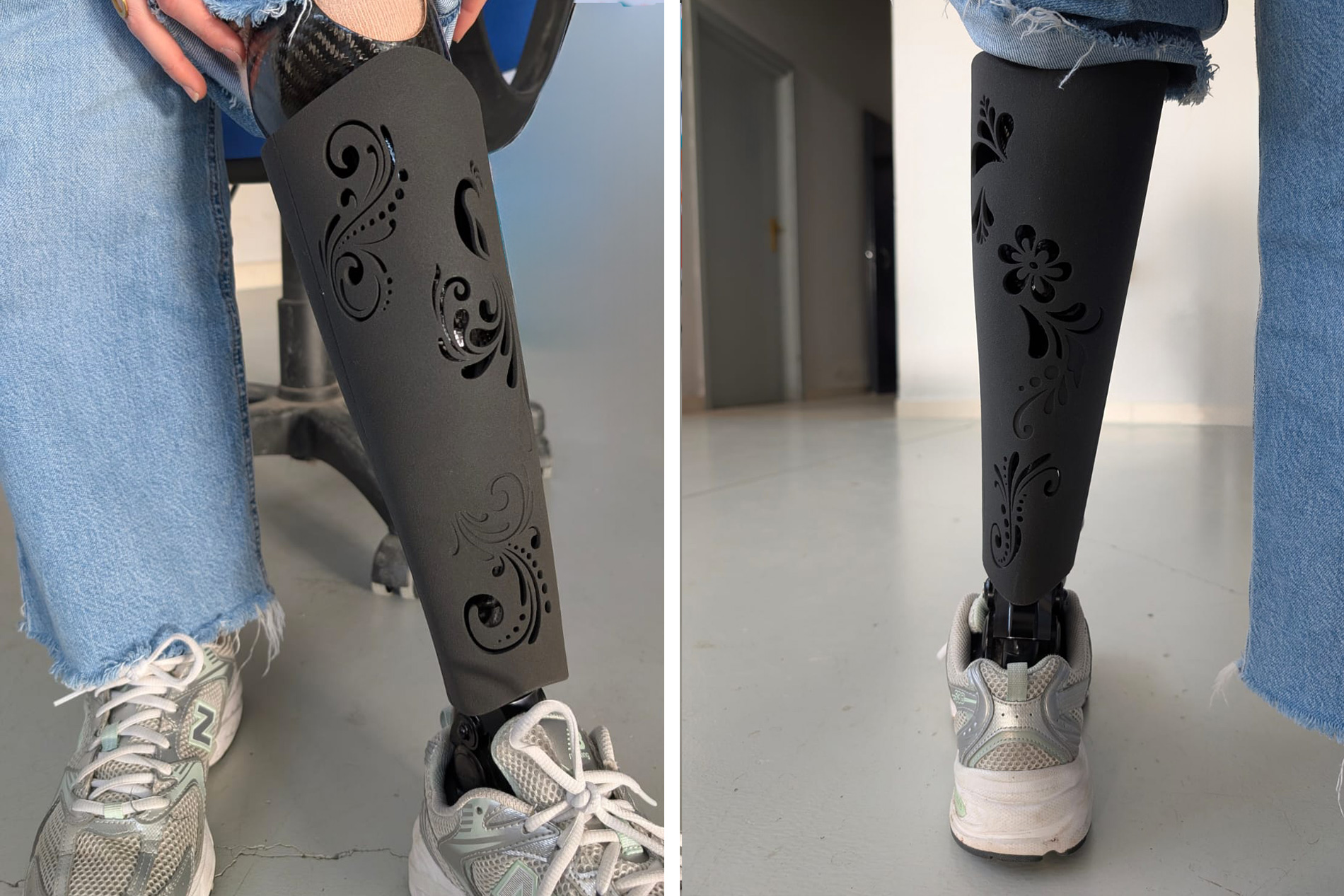
The client's objective was clear from the very beginning: to obtain a lightweight, elegant cover featuring a refined perforated floral pattern, capable of transforming the prosthesis into a distinctive and harmonious element of her personal image.
Precision Begins with 3D Scanning
Creating a truly custom-made cover is not simply a matter of designing an aesthetically pleasing element. Every detail must integrate perfectly with the existing prosthesis, respecting its geometry, dimensions, and attachment points.
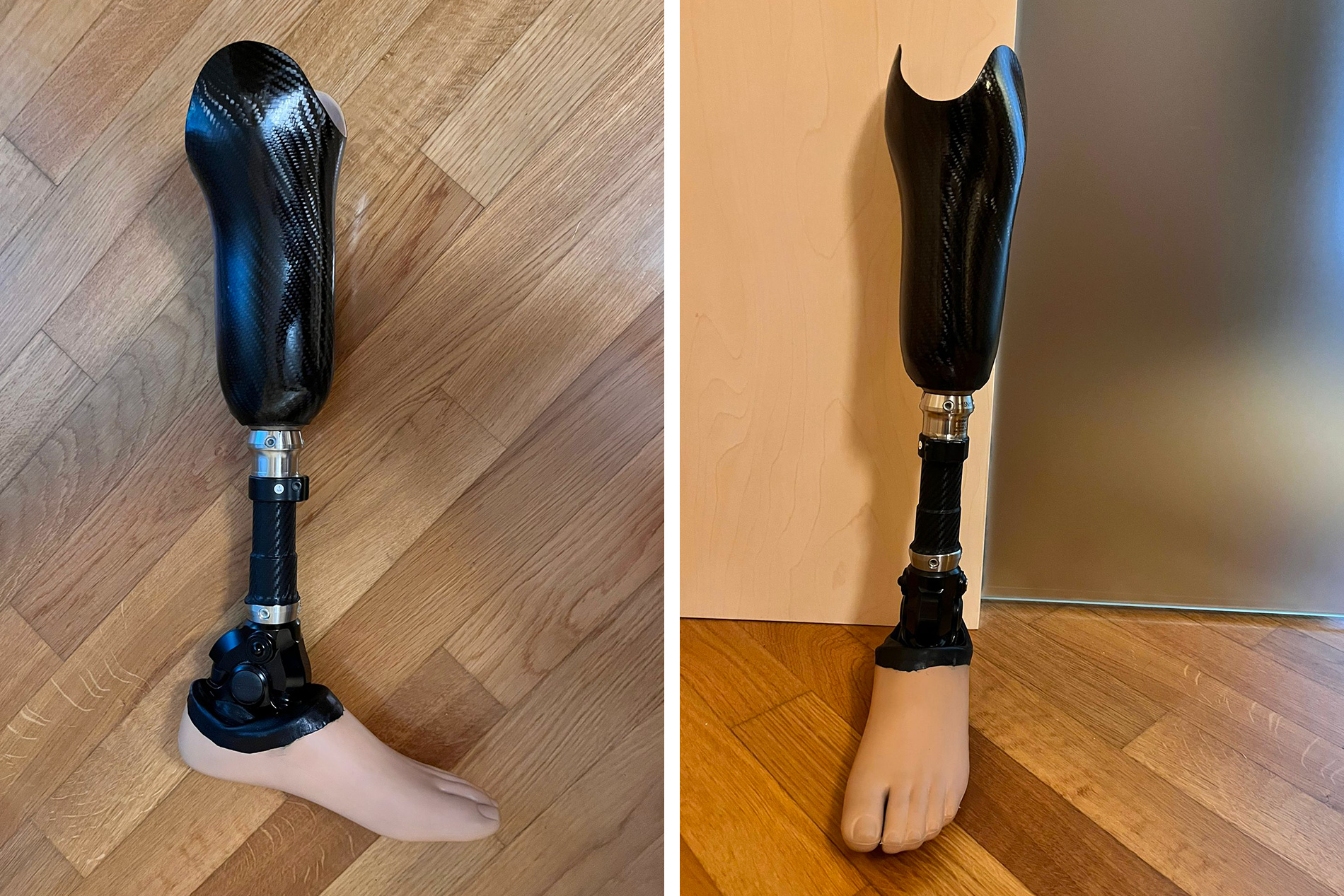
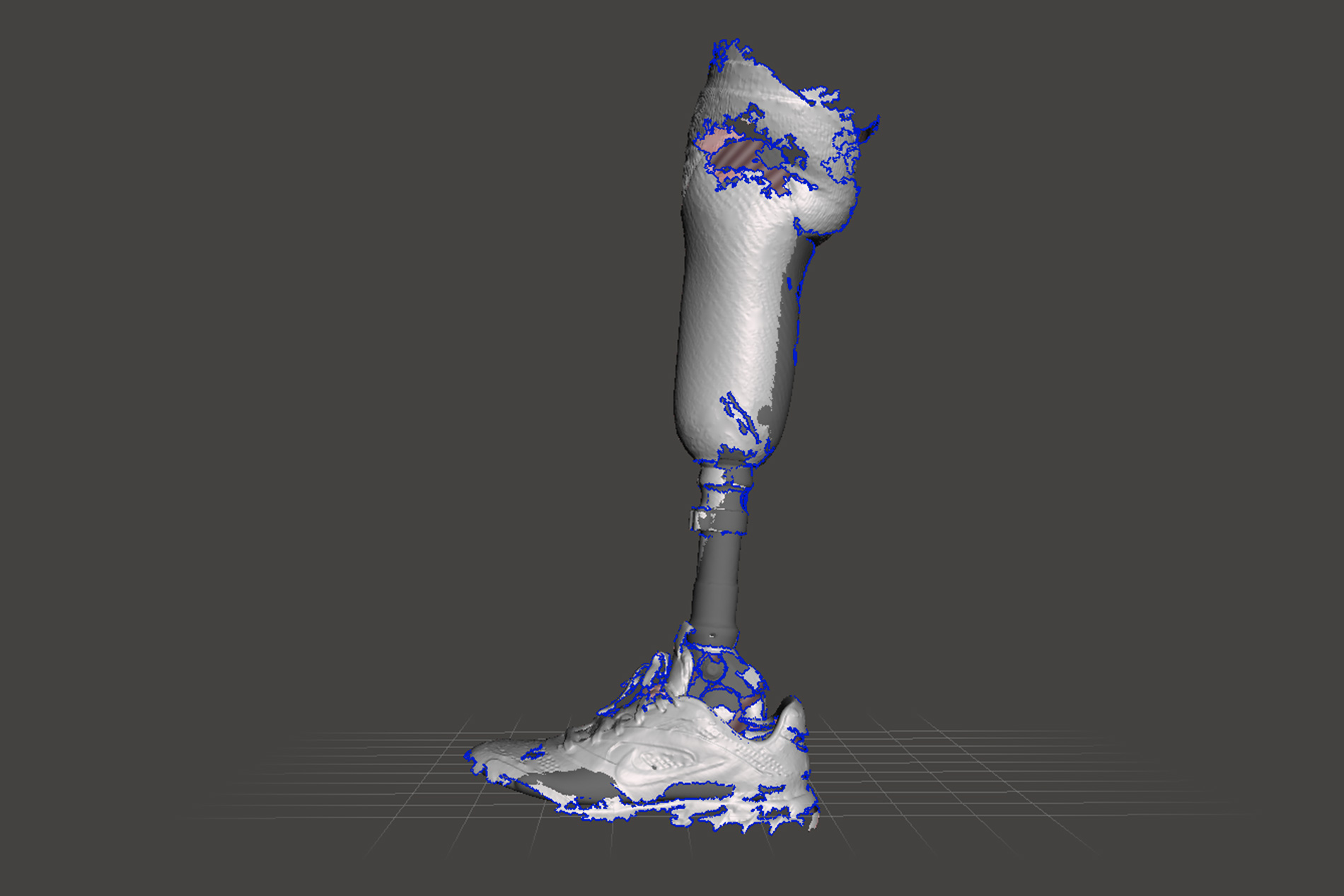
The first phase of the project was therefore dedicated to the digital acquisition of the prosthesis.
The scanning process represented one of the most delicate aspects of the entire project, as the structure consisted of a laminated carbon fiber socket and several modular metal components, surfaces that are notoriously challenging to capture using traditional scanning systems.
To ensure the highest level of accuracy, the FreeScan Combo metrology system by Shining3D was used. This solution is specifically designed to acquire highly accurate data from metallic, reflective, and geometrically complex objects.
Thanks to the quality of the acquired data, it was possible to obtain an extremely faithful digital model of the prosthesis, essential for designing a perfectly integrated cover equipped with a reliable and precise quick-release attachment system.
From Camouflage to Self-Expression
The initial design proposal was based on a traditional approach: replicating the volume of the contralateral limb to make the prosthesis less noticeable under clothing.
This solution was developed and prototyped using FFF technology with PLA Lightweight material, selected for its low weight. The goal was to create a lightweight cover with shapes as close as possible to natural anatomy.
However, the testing phase revealed several significant limitations. The structure proved too fragile for everyday use and exhibited surface defects that became even more evident after finishing and painting operations.
Nevertheless, the prototype represented a crucial step in the design journey. It enabled the team to realize that the best solution was not to conceal the prosthesis, but rather to enhance it.
Rethinking the Design: A Slimmer, More Elegant, and Dynamic Cover
Once the idea of anatomical replication was abandoned, the project moved in a new direction.
The choice of SLS (Selective Laser Sintering) technology required a complete redesign of the geometry. Unlike FFF printing, where weight reduction can be achieved through variable-density internal structures, SLS printing produces fully sintered components characterized by a different material distribution.
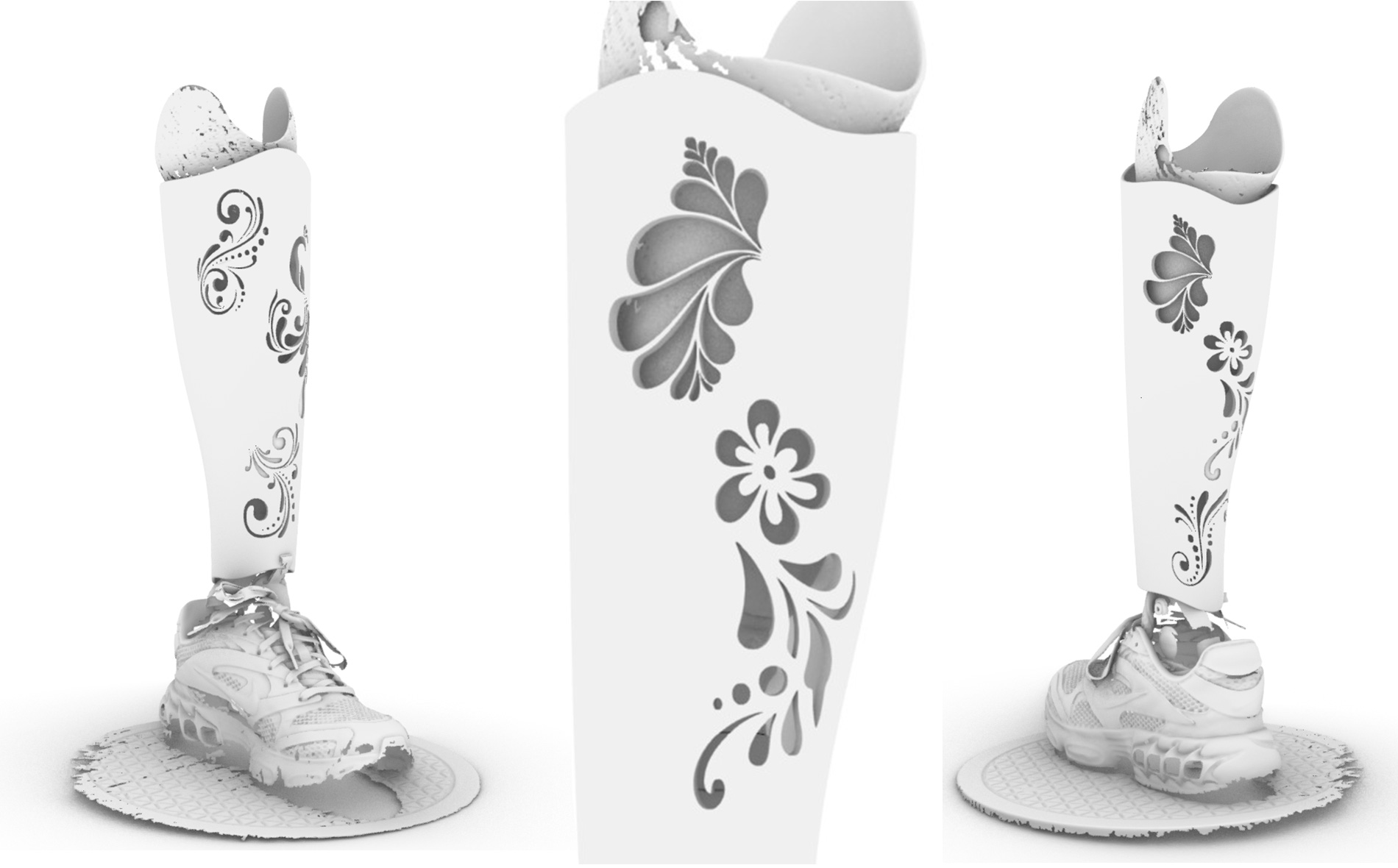
To maintain the objective of lightness, it became necessary to completely rethink the design, reducing volumes and giving the cover a slimmer, more fluid, and dynamic shape.
At this stage, the contribution of Crea3D industrial designer Flavio Piccarreta, who oversaw the project from start to finish, proved decisive. Through meticulous work on form modeling and optimization, the design gradually evolved into a highly distinctive aesthetic element capable of incorporating the refined floral pattern requested by the client without compromising strength or functionality.
The soft lines and decorative cutouts are far more than a stylistic exercise. They become an integral part of the structure, both visually and physically reducing weight while giving the component a unique elegance.
Material Selection: PA11.5 and SLS Printing with Lisa X
For final production, PA 11.5 by Sinterit was selected and printed using SLS technology on the Lisa X platform.
This choice was far from accidental. Compared to traditional PA12 polyamides, PA11.5 offers a greater ability to absorb stress and superior impact resistance, both essential characteristics for an accessory intended for daily use.
The combination of material and technology made it possible to create an extremely robust cover while maintaining a low overall weight.
The final result exceeded the original objectives: the complete structure achieved a weight of less than 500 grams, preserving the aesthetic quality of the perforated details while ensuring long-term reliability and durability.
A Simple Attachment System Designed for Everyday Life
The final stage of the project involved the validation of the cover directly by the client.
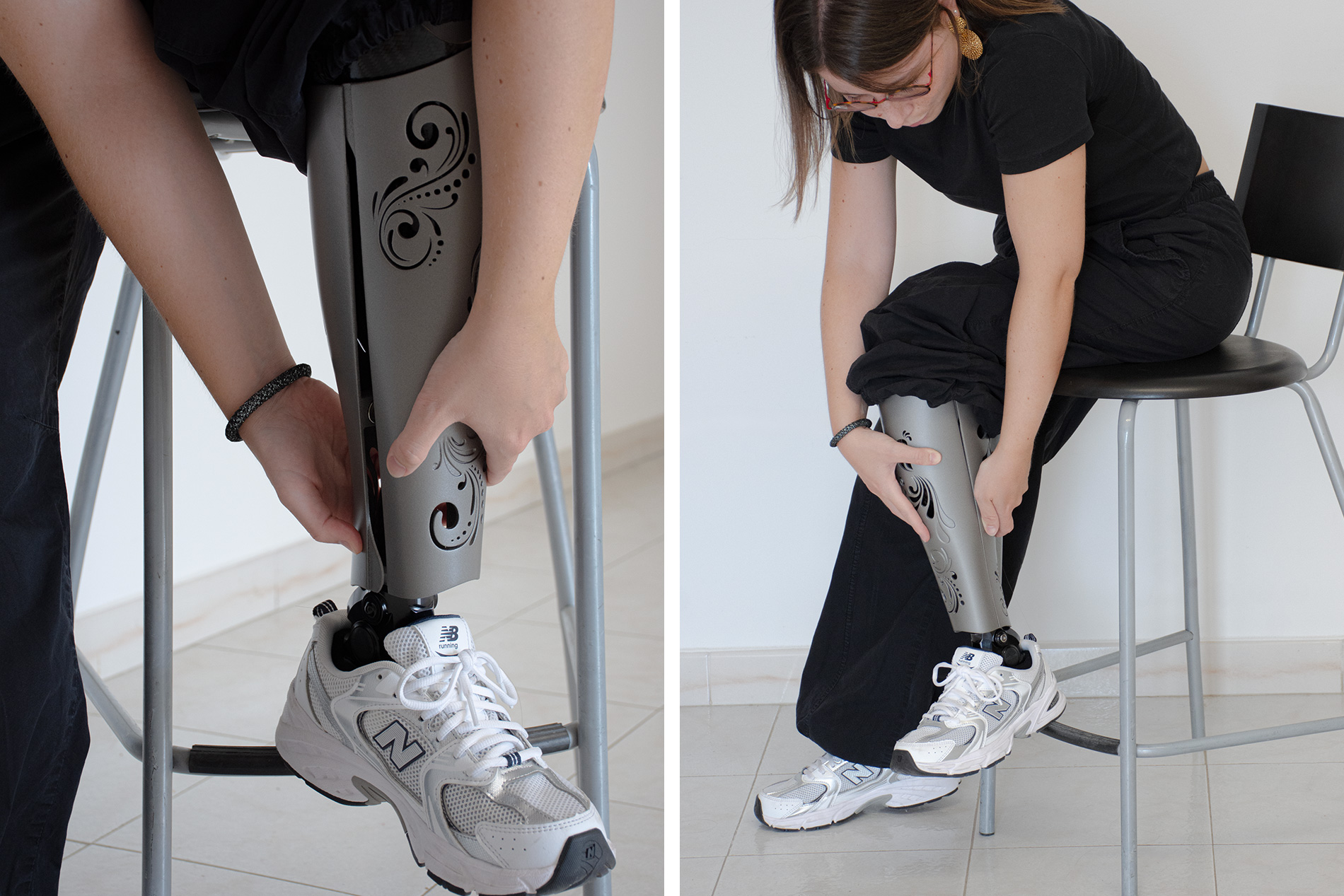
Particular attention was devoted to the attachment system, designed to be fast, intuitive, and secure in any usage scenario.
Testing confirmed that all objectives had been achieved: the cover could be easily attached and removed while maintaining perfect stability during use and integrating harmoniously with the prosthesis.
When a Cover Becomes a Bespoke Jewel
This project goes beyond the simple creation of an aesthetic accessory.
The cover was created to reflect the personality, taste, and identity of the person wearing it. It is the result of a design process that listened to the client's needs and transformed them into a unique object, impossible to reproduce on a mass scale because it was built around a specific individual.
Like a piece of jewelry crafted by an artisan, every curve, every cutout, and every detail tells a personal story.
In this context, 3D printing is not merely a manufacturing technology. It becomes the tool that makes it possible to restore individuality to a medical device that is too often perceived solely as a functional aid.
The prosthesis ceases to be something to hide and becomes something to wear naturally and confidently. An element that interacts with a person's style, enhances their appearance, and contributes to strengthening their self-perception.
Lightweight, harmonious, and designed to be attached in just a few seconds, this cover accompanies its wearer throughout daily life as a personal, elegant, and distinctive accessory.
Because the true value of customization lies not only in the precision of scans or the quality of printing, but in the ability to transform technology into something that speaks about the person who wears it.
And it is precisely here that innovation, design, and medicine come together: in the possibility of creating products that do not simply restore function, but help restore expression, identity, and freedom of choice.