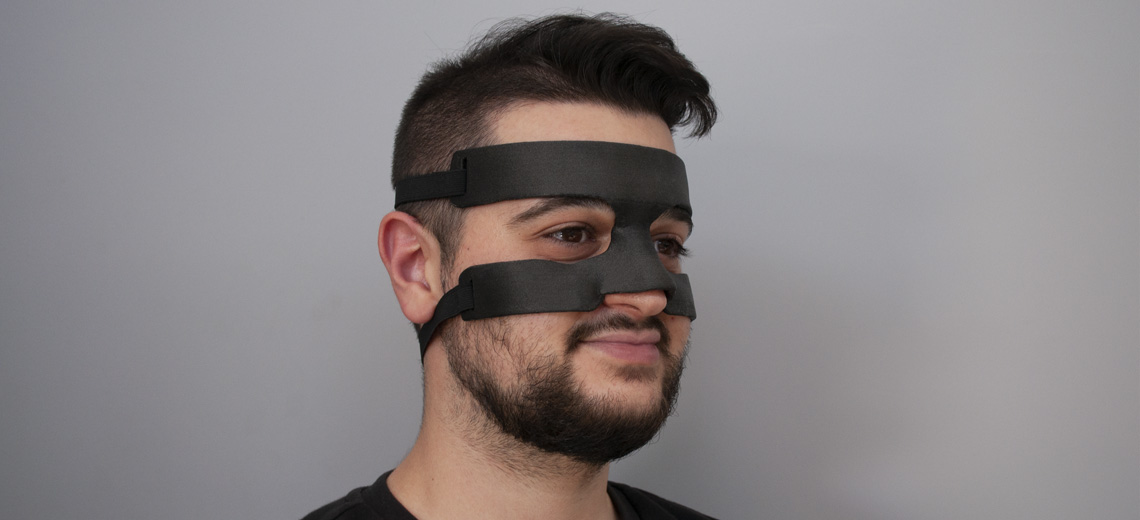
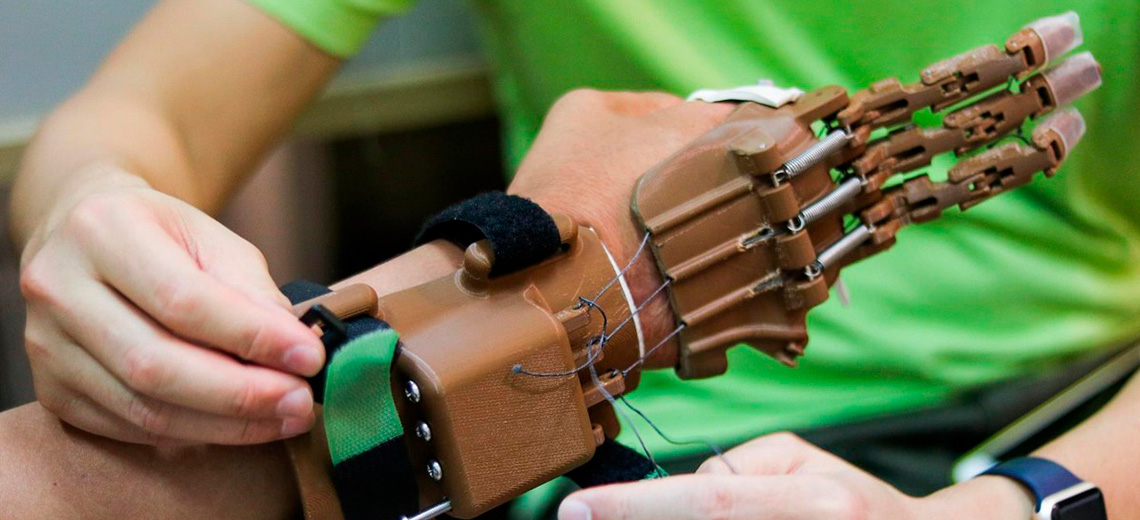
In the world of orthopedics, excellence is measured not only by clinical expertise but also by the ability to offer highly customized and technologically advanced solutions.
This vision has guided ITOP Officine Ortopediche, a well-established company in Italy, to update its operational workflow by introducing the EinStar VEGA scanner.
With its completely wireless design and all-in-one functionality, the EinStar VEGA represents a major step forward — a device that enables precise, rapid acquisition of patient measurements and shapes, replicating traditional plaster casts with accuracy, and operating seamlessly across different environments — from the workshop to hospital wards and even home visits.
About ITOP: A Company Projected Toward the Future
Founded as an artisanal workshop, ITOP is now a national reference point in Italy for the design, production, and fitting of custom orthopedic devices. It operates main facilities in Palestrina (Rome) and coordinates a network of centers primarily across Lazio and Sicily.
Its product range includes prostheses, orthoses, braces, insoles, corsets, and walking aids, developed in collaboration with the National Health Service, through tens of thousands of supplies every year.
Despite its long-standing craftsmanship tradition, ITOP has continuously invested in innovation, integrating cutting-edge technologies into its established processes to improve both clinical effectiveness and operational efficiency.

Why Choose a 3D Scanner? The Need for Change.
When ITOP considered introducing a 3D scanner into its operations, its priorities were clear:
- Precision and Geometric Accuracy
Traditional measurement methods, while well-established, can be prone to errors — particularly in complex cases or during the successive steps required to obtain the final positive model. A reliable and intuitive 3D scanner allows for highly accurate capture of the human body’s geometry or plaster molds, reducing errors, improving measurement precision, and shortening processing times. - Mobility and Operational Flexibility
In many scenarios — such as working with patients with reduced mobility, or in hospital and home environments — transporting bulky or fixed equipment can be challenging. A portable, standalone scanner enables ITOP professionals to move freely, minimizing operational and logistical constraints. - Digital Workflow Integration
With the shift toward digital processes (CAD modeling, 3D printing, CNC milling), it is essential that the scanner integrates smoothly into the workflow, providing compatible exports, automatic alignment, and reliable software interoperability.
Applications: Where and How ITOP Uses the Scanner
Here are some of the main practical uses of the EinStar VEGA within ITOP’s operations:
- Orthopedic corsets: capturing the patient’s torso anatomy, eliminating the need for traditional plaster casting, exporting 3D files, and processing models using specialized design software.


- Custom posture systems (e.g., Shield type): scanning the patient’s seating surface to create supports perfectly aligned with individual postural needs.

- Accurate plaster cast replicas: digitizing traditional plaster models to convert them into 3D data for design, improvement, or automated production.
- Clinical or home measurements: performing scans directly at the patient’s home or in clinical settings, with the same level of quality as in the workshop.
Technical Strengths of the EinStar VEGA in the Orthopedic Field
Through its hardware and software features, the EinStar VEGA stands out as an ideal tool for orthopedic applications. Here are its key advantages:
-
Portability and Multi-Context Use
The wireless scanner allows companies like ITOP Officine Ortopediche to acquire scans in the workshop, in hospital departments, or directly at patients’ homes — with no need for fixed connections or dedicated spaces.
The VEGA weighs around 535 g, and data can be transferred via Wi-Fi 6 or USB-C. - Dual Scanning Modes (Fast / HD)
• Fast Mode (VCSEL): coverage from 350 to 1,500 mm, up to 20 fps — ideal for large surfaces and quick scans.
• HD Mode (MEMS): operating distance from 100 to 350 mm, minimum point distance 0.05 mm, up to 15 fps — for fine details.This flexibility allows easy switching from scanning large body areas or objects (Fast Mode) to capturing smaller ones where high detail is essential (HD Mode).
- Smart Alignment and Orientation
The EinStar VEGA offers multiple alignment modes (feature, texture, marker, hybrid), which help position the acquired model according to reference axes, simplifying the subsequent CAD/milling design phase.

- StarVision Software and Post-Processing Tools
The proprietary software enables merging of multiple scans, mesh simplification (polygon reduction), export in standard formats (STL, OBJ, PLY, ASC), and compatibility with CAD/CAM workflows.

Results Achieved by ITOP with the EinStar VEGA
The adoption of the scanner has brought ITOP several tangible benefits:
- Reduced acquisition times: measurements that once required manual tools and lengthy sessions can now be captured in just minutes — even for patients with limited mobility.
- Greater accuracy and fewer adjustments: digital replicas of plaster casts exhibit high fidelity, minimizing error margins and post-processing corrections.
- Operational flexibility and mobility: home visits and hospital or clinical scans can now be performed with the same quality as in the lab, without heavy equipment or fixed setups.
- Smooth integration into the digital workflow: with standard file formats and alignment/merging functions, the acquired models fit seamlessly into CAD/CAM systems, ensuring a more efficient and controlled production chain.